

How does the shape of a Butt Fusion Reducing Tee affect its performance?
Aug 12, 2026
As a supplier of Butt Fusion Reducing Tees, I've witnessed firsthand the critical role that the shape of these fittings plays in their performance. In this blog, I'll delve into the various aspects of how the shape of a Butt Fusion Reducing Tee affects its functionality and efficiency.
Flow Dynamics
The shape of a Butt Fusion Reducing Tee significantly influences the flow of fluids within a piping system. A well - designed tee can minimize turbulence and pressure drop, ensuring smooth and efficient flow.
When the branches of the tee are smoothly contoured, the fluid can transition from the main pipe to the smaller branch with less resistance. For example, a tee with a gradual reduction in diameter at the branch connection allows the fluid to adjust its velocity gradually. This is in contrast to a tee with a sharp reduction, which can cause the fluid to form eddies and whirlpools. These turbulent flow patterns not only increase the energy required to pump the fluid but also can lead to wear and tear on the inner walls of the tee over time.
In a piping system where consistent flow is crucial, such as in a water supply network, a Butt Fusion Reducing Tee with an optimized shape can help maintain a stable pressure and flow rate. This is especially important when the system is transporting large volumes of fluid over long distances.
Structural Integrity
The shape of the tee also has a direct impact on its structural integrity. A properly shaped Butt Fusion Reducing Tee can distribute stress evenly across its body, reducing the risk of failure under pressure.
The transition area between the main pipe and the branch is a critical point in terms of stress concentration. A tee with a rounded and well - blended transition can better withstand the forces exerted by the fluid. In contrast, a tee with a sharp corner at the branch connection can experience high stress concentrations, making it more prone to cracking or bursting.
Moreover, the overall shape of the tee should be designed to resist external forces, such as mechanical vibrations or ground movement. For instance, a tee with a more compact and symmetrical shape is generally more stable and less likely to be affected by these external factors.
Compatibility with Piping Systems
The shape of a Butt Fusion Reducing Tee determines its compatibility with different piping systems. Different applications may require specific shapes to ensure a proper fit and connection.
For example, in a system where space is limited, a tee with a more compact shape may be preferred. This allows for easier installation and reduces the overall footprint of the piping system. On the other hand, in a system where flexibility is required, a tee with a more elongated shape may be more suitable as it can better accommodate minor misalignments between pipes.
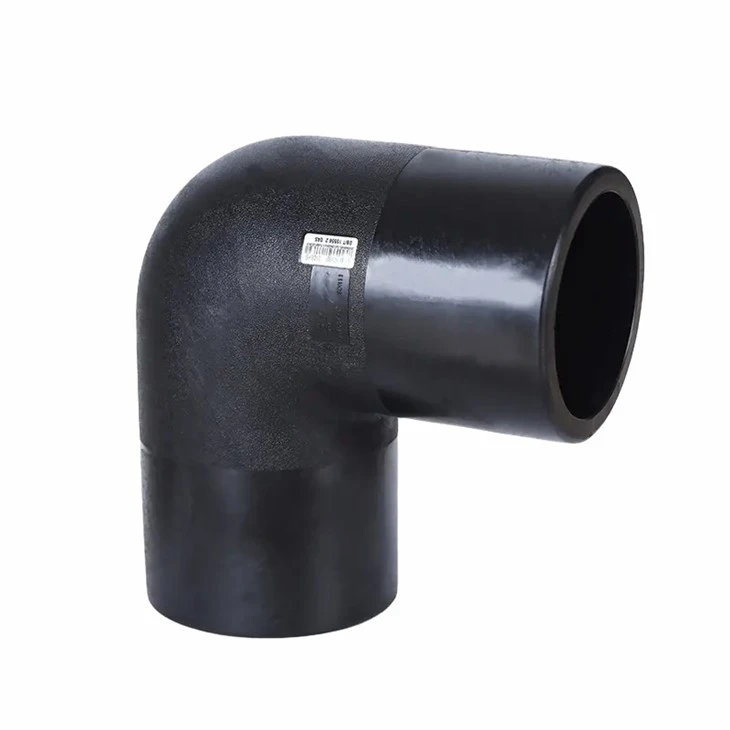
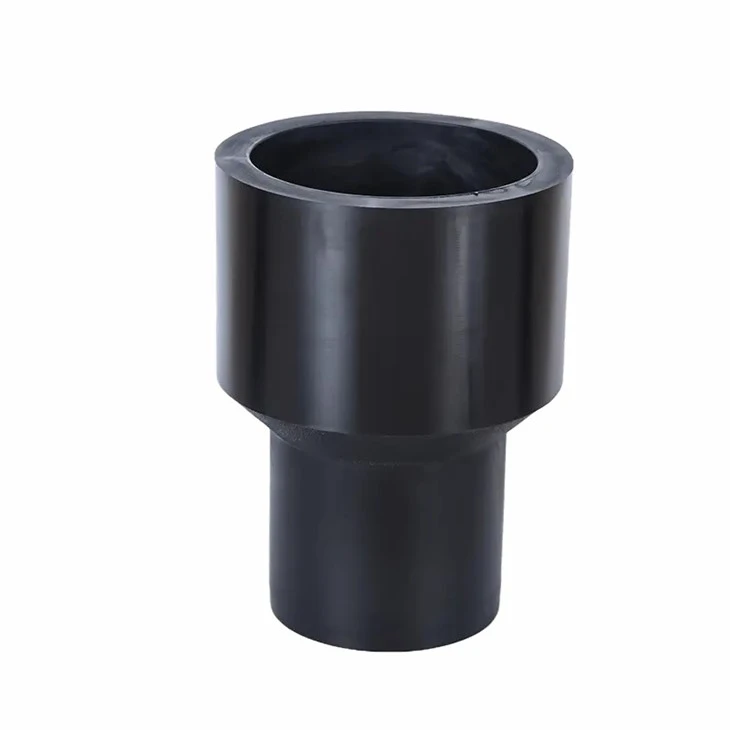
The shape of the tee also affects its ability to be connected to other fittings. A well - shaped tee can be easily butt - fused to other pipes and fittings, such as Butt Fusion 45 Elbow, Butt Fusion 90 Elbow, HDPE Injection Molded Flange Adaptor, and HDPE Injection Molded Reducer. The smooth and consistent shape of the tee ensures a reliable and leak - free connection, which is essential for the long - term performance of the piping system.
Manufacturing Considerations
The shape of a Butt Fusion Reducing Tee is also influenced by manufacturing processes. Different manufacturing techniques can produce tees with varying shapes and qualities.
Injection molding is a common method for producing HDPE tees. The shape of the mold determines the final shape of the tee. Manufacturers need to carefully design the mold to ensure that the tee has the desired shape and dimensions. For example, the mold should be designed to create a smooth and uniform transition between the main pipe and the branch, as well as to minimize any internal defects.
Extrusion is another manufacturing process that can be used to produce tees. In extrusion, the tee is formed by pushing the plastic material through a die. The shape of the die determines the cross - section of the tee. Manufacturers need to ensure that the die is designed to produce a tee with the correct shape and wall thickness.
Cost - Efficiency
The shape of a Butt Fusion Reducing Tee can also impact its cost - efficiency. A well - designed tee can reduce the overall cost of a piping system by improving its performance and reducing maintenance requirements.
As mentioned earlier, a tee with a shape that minimizes turbulence and pressure drop can reduce the energy consumption of the pumping system. This can lead to significant cost savings over the life of the system. Additionally, a tee with a shape that enhances its structural integrity is less likely to fail, reducing the need for costly repairs and replacements.
On the other hand, a poorly shaped tee may require more frequent maintenance and replacement, increasing the overall cost of the piping system. Therefore, it is important for customers to choose a Butt Fusion Reducing Tee with an optimized shape to ensure long - term cost - efficiency.
Conclusion
In conclusion, the shape of a Butt Fusion Reducing Tee has a profound impact on its performance in various aspects, including flow dynamics, structural integrity, compatibility with piping systems, manufacturing considerations, and cost - efficiency. As a supplier, we understand the importance of providing high - quality tees with well - designed shapes.
If you are in the market for Butt Fusion Reducing Tees or other related fittings, such as Butt Fusion 45 Elbow, Butt Fusion 90 Elbow, HDPE Injection Molded Flange Adaptor, and HDPE Injection Molded Reducer, we invite you to contact us to discuss your specific requirements. Our team of experts is ready to provide you with the best solutions for your piping system.
References
- "Piping Handbook" by Mohinder L. Nayyar
- "Fluid Mechanics" by Frank M. White
- "Plastic Pipe Systems" by John W. Summers